24 leçons pour apprendre seul le tarot de Marseille
Colette Silvestre-Haeberle · 1996
See the book
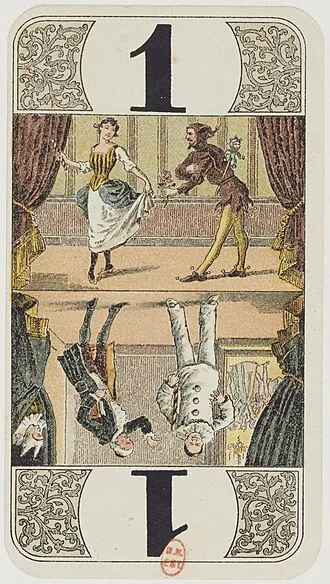
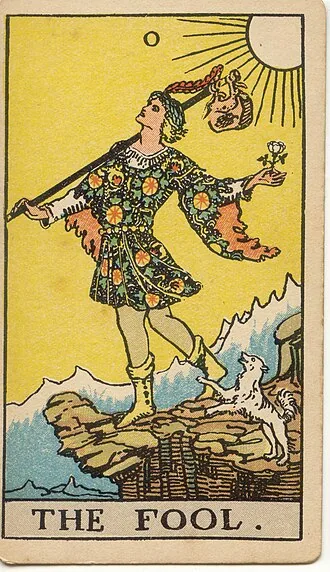
The old decks, the Tarot of Marseille and the Rider-Waite, with the authors who fixed the meaning of the cards.
Library figures as of November 9, 2026.
Books on the tarot fall into three families. Manuals give the meaning of the seventy-eight cards and how to draw them. Historians go back to the first Italian decks, like Michael Dummett with the Visconti-Sforza cards. Occultists link the arcana to the Hebrew letters, astrology and Kabbalah, from Éliphas Lévi to Robert Wang.
The shelf covers several decks. The Tarot de Marseille has its references in French: Paul Marteau in 1949, Colette Silvestre, Jodorowsky and Marianne Costa. The Waite-Smith has its books by Marcus Katz and Tali Goodwin, who tell the birth of its images, and Rachel Pollack gives a general manual of the seventy-eight cards. Crowley's Thoth has its commentary by Lon Milo DuQuette, and Yoav Ben-Dov offers an open reading of the Marseille, where meaning comes from the position of the cards and their relation.
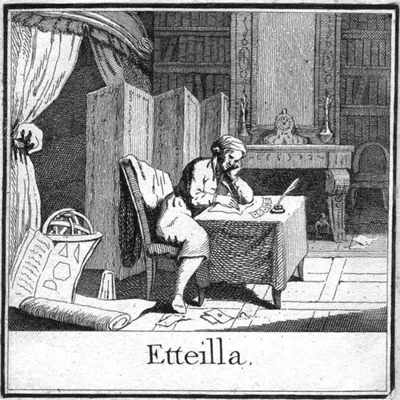
The free texts go further back. In 1777 Court de Gébelin published the idea of an Egyptian tarot. From 1770 to 1790 Etteilla published divination methods, first on the piquet deck, then on the tarot. Lévi, Paul Christian, Oswald Wirth and Papus then built the occultist reading.
Colette Silvestre-Haeberle · 1996
See the bookA step-by-step method by Colette Silvestre-Haeberle, published in 1996, which goes from the meaning of the cards to spreads. For starting alone with a Marseille.
Alejandro Jodorowsky and Marianne Costa · 2004
See the bookIn 2004 Jodorowsky and Marianne Costa read the seventy-eight cards of the Camoin-Jodorowsky deck, the minors by number, in a symbolic and therapeutic approach.
Thierry Depaulis · 1984
See the bookThierry Depaulis wrote this book in 1984 for a BnF exhibition. It follows the tarot from game to divination and serves as a historical landmark in French.
Rachel Pollack · 1980
See the bookIn 1980 Rachel Pollack goes through the seventy-eight cards, with the minors, the court cards and spreads. A continuous reading, in English.
Mary K. Greer · 1984
See the bookIn 1984 Mary K. Greer offers a reflective reading, with spreads and a reading journal. Take it if you want to read the tarot for yourself rather than for others.
Marcus Katz and Tali Goodwin · 2015
See the bookIn 2015 Marcus Katz and Tali Goodwin tell how the Waite-Smith iconography took shape, then give the meaning of the cards. The right book if your deck is a Waite-Smith.
Hajo Banzhaf · 1986
See the bookIn 1986 Hajo Banzhaf gives the meaning of the seventy-eight cards and the spreads, in German. By the same author, Schlüsselworte zum Tarot, in 1990, gives keywords for each card.
To begin
To go deeper
Going further
All 1,493 Books 1,397Free 69Journals 1Articles 26
Refinar
Pietro Alligo
66,18 € at Cultura
See the bookSandytatoo
9,90 € at Cultura
See the bookYvelise Quéfféléant
11,58 € at Cultura
See the bookAlcide Nathanaël
19,90 € at Cultura
See the bookPamela Colman Smith A. E. Waite · 2022
£14.24 at Bookshop.org
See the book23,90 € at Cultura
See the bookRachel Paul
66,18 € at Cultura
See the bookJaymi Elford
66,18 € at Cultura
See the bookCharlie Westby Zibordi Marchesi Guido
24,90 € at Cultura
See the bookCollectif
49,95 € at Cultura
See the bookMarion Blanc Malory Malmasson
27,00 € at Cultura
See the book26,00 € at Cultura
See the bookDéborah Blake
32,00 € at Cultura
See the bookJean-Pierre Jouvin · 1999
31,50 € at Cultura
See the bookDaniel Briez
74,98 € at Cultura
See the bookAurore Neveu · 2024
24,90 € at Cultura
See the book16,99 € at Cultura
See the bookBéatrice Pubellié Joyce Duval
35,00 € at Cultura
See the bookClaire Duval
34,90 € at Cultura
See the bookAlisa Marazyuk Rouxalis
28,00 € at Cultura
See the bookEmilie Porte
27,00 € at Cultura
See the bookWilfried Houdouin
22,00 € at Cultura
See the bookLeeza Robertson
32,90 € at Cultura
See the book24,90 € at Cultura
See the bookShawn Mackenzie
29,90 € at Cultura
See the bookJean Beauchard
32,00 € at Cultura
See the bookDavid Depasquale
24,90 € at Cultura
See the bookCollectif
26,00 € at Cultura
See the bookMagdelina Messina
24,90 € at Cultura
See the bookPamela Chen · 2024
27,00 € at Cultura
See the bookMelinda Lee Holm
26,00 € at Cultura
See the bookAntonella Platano Laura Tuan
66,18 € at Cultura
See the bookMark Evans Ellen Dugan
29,90 € at Cultura
See the bookJean-Marc Misiaszek Christine Benoit
29,00 € at Cultura
See the bookLeeza Robertson
28,00 € at Cultura
See the bookMonica Bordisky
32,00 € at Cultura
See the bookYves Rochon
14,00 € at Cultura
See the bookMélanie Vernhes · 2026
10,50 € at Cultura
See the bookColette Silvestre
9,40 € at Cultura
See the bookLeeza Robertson · 2024
28,00 € at Cultura
See the bookBruno Letizia, Oswald Wirth, Mirko Negri
24,90 € at Cultura
See the bookJoseph Viglioglia
66,18 € at Cultura
See the bookEric Jackson Perrin
21,99 € at Cultura
See the bookEmilie Porte
13,90 € at Cultura
See the bookOlivier Peyrebrune
20,00 € at Cultura
See the bookColette Silvestre
23,90 € at Cultura
See the bookSylvie Lavoie Gabriel Sanchez
22,00 € at Cultura
See the bookCollectif
53,65 € at Cultura
See the bookThe earliest book by each author in this section, dated by the edition offered here.
The more we learn, the more evident does it become that we, as persons, are what we are because of innumerable impacts of energy upon us, and playing through us. We do not live alone.
In the French Marseille tradition, Paul Marteau fixed in 1949 the meaning of the cards of the Grimaud deck, Colette Silvestre gives the symbolism of each card, and Jodorowsky adds a therapeutic reading. Valentin Tomberg meditates on each major arcanum with Kabbalah and astrology, Georges Muchery ties the cards to the stars. On the English side, Rachel Pollack gives the general manual, Mary K. Greer offers a reflective reading, reversed meanings and court cards, Benebell Wen makes a major work of it with astrology and numerology. Sallie Nichols and Simone Berno read the arcana with Jung, Arthur Rosengarten relates them to psychology. Robert Wang, Mouni Sadhu and Israel Regardie follow the Kabbalistic vein and that of the Golden Dawn. The historians answer them: Michael Dummett, Ronald Decker and Thierry Depaulis show where the idea of an occult tarot comes from, Robert Place traces the history and symbolism, and Gertrude Moakley reads the Visconti-Sforza triumphs through Renaissance processions.
Court de Gébelin's text of 1777 on the supposed Egyptian origin of the tarots, with Mellet's memoir on their divinatory use.
In 1783 Etteilla gives the meaning of the seventy-eight cards, upright and reversed, with his spreads and his Hermetic theory.
Éliphas Lévi presents the tarot here as a key, with the symbolism of the cards, numbers and letters.
In 1927 Oswald Wirth reads the twenty-two major arcana through their Masonic symbolism and their numbers.
In 1891 Papus makes the tarot a key to the occult sciences, between Kabbalah, correspondences and astrology.
In 1906 Henry-René d'Allemagne devotes a major work to playing cards, including the tarots, their iconography and cartomancy.
Aleister Crowley's journal, published from 1909 to 1919, in which the tarot rubs shoulders with magic, Kabbalah and yoga.
Take the book that matches the deck you hold. For the Marseille, aim for Silvestre or Marteau in French. For the Waite-Smith, Katz and Goodwin tell in English the genesis of its images.
This idea comes from Court de Gébelin in 1777, then from Etteilla. The book A Wicked Pack of Cards by Decker, Depaulis and Dummett traces the origin of the occultist tarot, and Dummett studies the oldest Italian tarots.
Methods vary by author. The Complete Book of Tarot Reversals, by Mary K. Greer in 2002, compares them, and Etteilla already gave a meaning to reversed cards in 1783.
In 1980 Sallie Nichols offers a Jungian reading of the twenty-two major arcana, in English. In French, Simone Berno published in 1999 a Jungian reading of the arcana.
Yes, many works are in the public domain. You find Etteilla, Court de Gébelin, Éliphas Lévi, Oswald Wirth and Papus, all in French.
Guide updated on 7 novembre 2026